
Scene Overview
Industry Overview & FSR Value
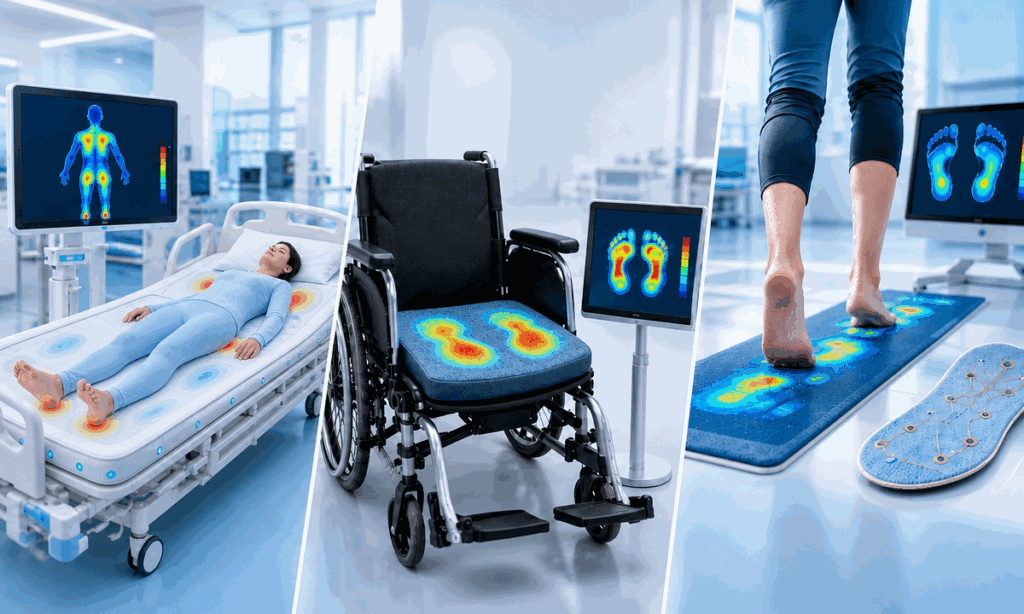
Clinical rehabilitation and ergonomic monitoring require ultra-thin, breathable, and flexible tactile surfaces that measure continuous pressure distribution without causing patient skin discomfort or tissue shear.
Industry Context & Clinical Challenges
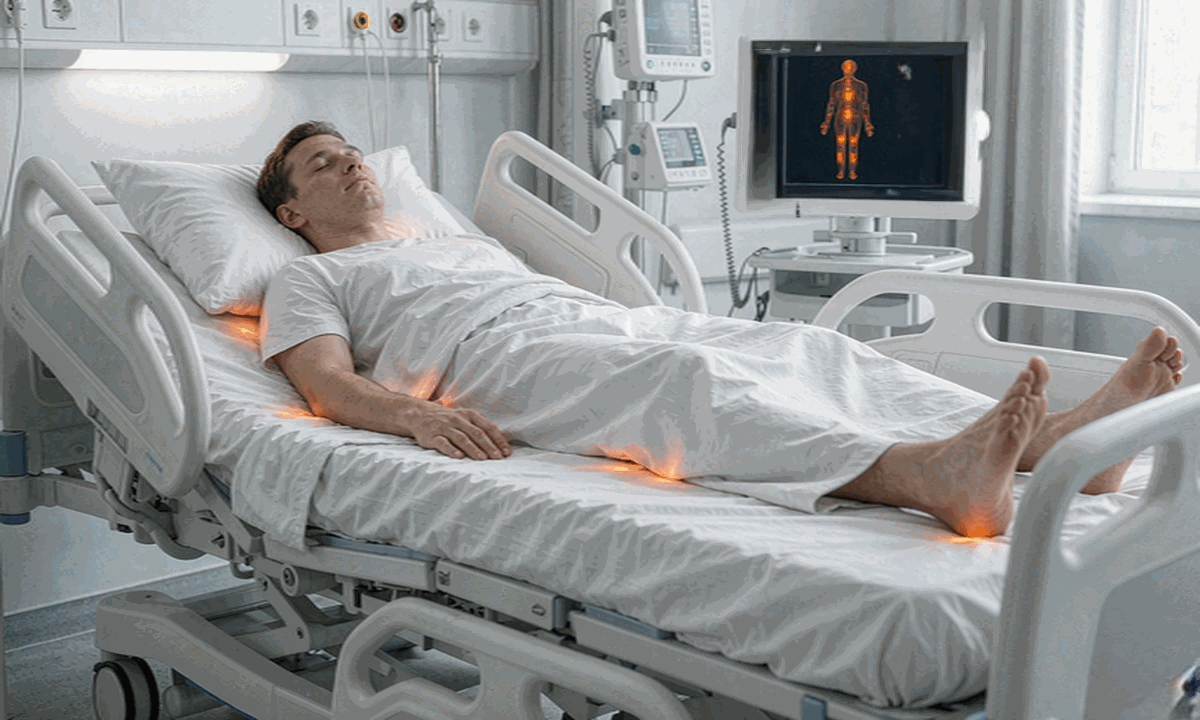
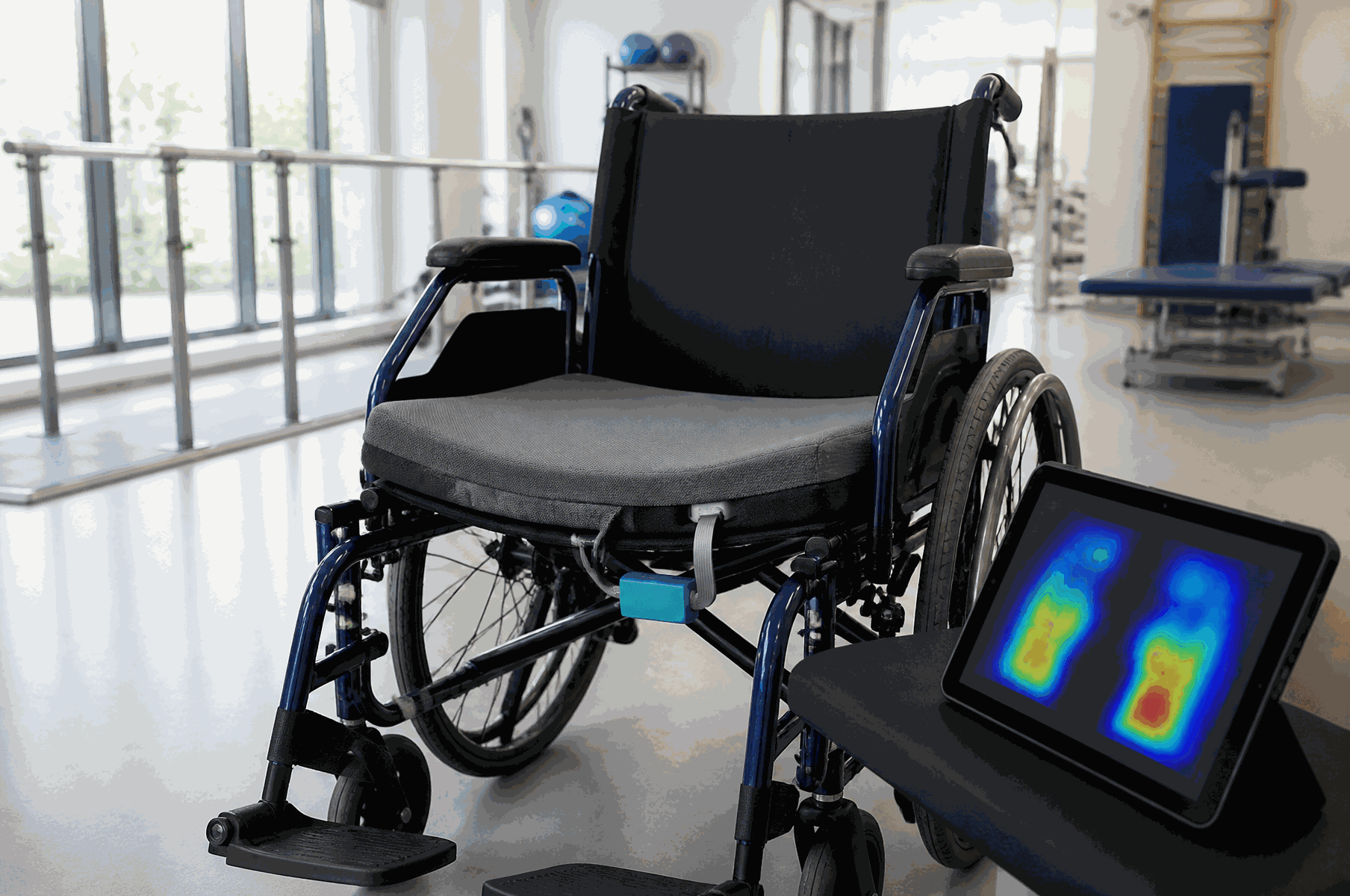
In healthcare, prolonged localized pressure is the primary cause of pressure ulcers in bedridden patients and wheelchair users. Accurate, non-invasive tactile monitoring is critical for preventative care:
- Tissue Shear & Discomfort Risk: Rigid or thick sensors placed on mattresses or cushions create localized pressure points that increase skin breakdown risk instead of preventing it.
- Long-Term Biocompatibility & Hygiene: Clinical sensor layers must be breathable, cleanable with standard disinfectants, and compliant with medical safety and flammability standards.
- High-Density Multi-Point Monitoring: Full-body bed mats or seating cushions require hundreds to thousands of continuous sensing nodes to accurately identify peak pressure zones and posture shifts over hours of immobility.
FSR Value & Engineering Solution
FSRTEK fabric-based and flexible thin-film sensor arrays empower smart medical and rehabilitation devices:
- Breathable & Compliant Sensor Mats: Patented matrix designs integrate thousands of sensing nodes onto perforated, breathable flexible substrates that conform naturally to patient anatomy without heat or moisture buildup.
- Zero-Crosstalk Matrix Architecture: Proprietary zero-potential scanning circuitry ensures zero cross-talk between adjacent nodes, producing medical-grade pressure distribution heatmaps.
- Smart Posture & Repositioning Telemetry: Seamlessly interfaces with clinical nurse stations and caregiver mobile apps to provide automated repositioning timers, posture asymmetry alerts, and historical compliance logs.
Industry Environment
Operating Environment & Sensor Integration
Projects In This Scene
Concrete Projects In This Scene
Need a solution for a similar application?
Send us your target force range, sensing area and integration constraints.